
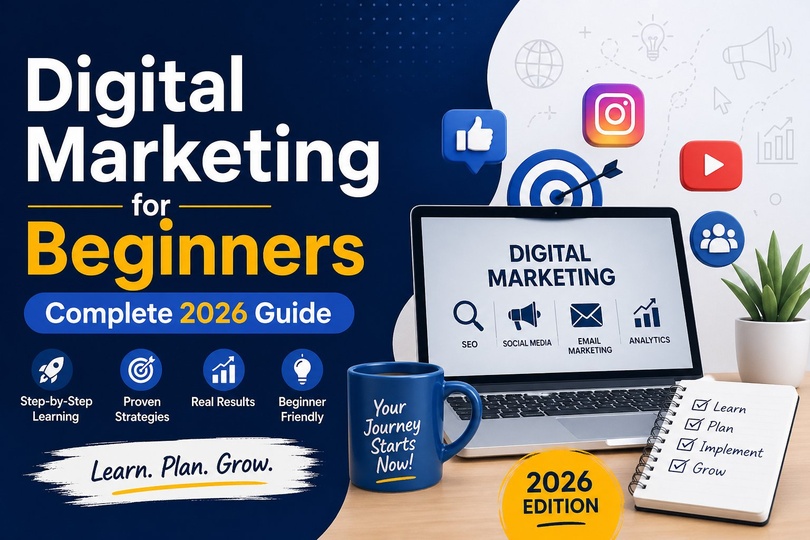
If you are new and want to understand how online marketing works, this guide is made for you. In this article on digital marketing for beginners, you will learn what digital marketing is, why it matters, its types, benefits, and how to get started step by step.
In today’s online world, businesses do not rely only on traditional marketing. They use the internet to connect with people, build trust, and grow faster. This is where digital marketing becomes important.
What is Digital Marketing?
Digital marketing is the process of promoting products or services using digital platforms such as search engines, social media, websites, and email. Unlike traditional marketing — which uses TV, newspapers, and hoardings — digital marketing works entirely online and gives you real-time data on how your campaigns are performing.
For digital marketing for beginners, it simply means using the internet to reach the right people at the right time with the right message. Whether you are a business owner, a student, or someone starting a new career — understanding digital marketing is one of the most valuable skills you can develop in 2026.
Simple Example: When you search for something on Google and see ads or websites at the top — that is digital marketing. When you scroll Instagram and see a sponsored post from a brand — that is also digital marketing. When you get a promotional email from your favourite brand — digital marketing again.
Why Digital Marketing Matters in 2026
Digital marketing is now essential for every business.
1. People Spend More Time Online
The average person spends over 6 hours online every day. Whether it is scrolling social media, watching YouTube, or searching Google — your customers are online. Digital marketing helps you reach them exactly where they already are.
2. Cost-Effective Marketing
Digital marketing is significantly cheaper than traditional advertising. A Google Ad campaign can start with as little as ₹500 per day, while a newspaper or TV ad costs lakhs. For small businesses and startups, this makes digital marketing the most practical option..
3. Targeted Audience
Unlike TV or print ads that reach everyone, digital marketing lets you target specific people based on age, location, interests, and behaviour. For example, a Hyderabad restaurant can show ads only to people within 5 kilometres who are interested in food.
4. Measurable Results
Every digital marketing campaign gives you data. You can see exactly how many people saw your ad, clicked it, and bought from you. This makes it easy to track what is working and improve what is not.
5. Global Reach
Even a small business in Hyderabad can reach customers across India or globally using digital marketing. Platforms like Google, Facebook, and Instagram have billions of users — and you can reach any of them with the right strategy.
Types of Digital Marketing
To understand digital marketing, you need to learn its main types.
1. Search Engine Optimization (SEO)
SEO helps your website rank higher on Google when someone searches for a relevant topic. For example, if someone searches “best bakery in Hyderabad” — SEO helps that bakery’s website appear on page 1 without paying for ads. Key activities include keyword research, content creation, on-page optimization, backlinks, and technical SEO. SEO is one of the most valuable long-term investments in digital marketing because it brings free, consistent traffic.
Want to understand how AI is now powering SEO? Read our guide on what is AI SEO
2. Search Engine Marketing (SEM)
SEM involves running paid ads on search engines like Google. When you search something and see results marked “Sponsored” at the top — those are SEM ads. Unlike SEO which takes time, SEM gives you instant visibility. Google Ads is the most widely used SEM platform and allows you to target specific keywords, locations, and audiences with a daily budget you control.
3. Social Media Marketing
Social media marketing means promoting your brand on platforms like Instagram, Facebook, LinkedIn, and YouTube. It helps you build a community, increase brand awareness, and engage directly with your audience. Consistent posting, engaging content, and responding to comments are the basics of effective social media marketing. Most businesses in India use Instagram and Facebook as their primary social media platforms.
It plays a big role in digital marketing because it helps build engagement and trust.
4. Content Marketing
Content marketing focuses on creating helpful, valuable content like blogs, videos, infographics, and guides that attract and educate your audience. Instead of pushing ads at people, content marketing pulls them in organically by answering their questions and solving their problems. This blog itself is an example of content marketing for beginners — it provides real value and builds trust with the reader.
5. Email Marketing
Email marketing is one of the highest ROI channels in digital marketing. It means sending targeted emails to your subscribers with helpful content, offers, or updates. For every ₹1 spent on email marketing, businesses earn an average of ₹36 in return. Tools like Mailchimp and Brevo make it easy for beginners to create and send professional email campaigns.
6. Affiliate Marketing
Affiliate marketing means earning commission by promoting another company’s products or services. When someone clicks your unique affiliate link and makes a purchase — you earn a percentage of the sale. Popular affiliate programs include Amazon Associates, Flipkart Affiliate, and many SaaS companies. It is a great way for beginners to earn money online without creating their own product.
7. Influencer Marketing
Influencer marketing means brands partnering with social media influencers to promote their products to a larger audience. Influencers have built trust with their followers — so their recommendations feel more genuine than traditional ads. Micro-influencers with 10,000 to 100,000 followers often give better results than mega-celebrities because their audiences are more engaged.
Interested in this path? Read our guide on how to become a digital marketing influencer
How Digital Marketing Works
The process of digital marketing is simple and structured.
Step 1: Understand Your Audience
Before doing anything else, you need to clearly define who your target customer is. What are their age, location, interests, and online habits? Creating a buyer persona helps you make every marketing decision — from what platform to use to what content to create.
Step 2: Choose Platforms
Not every platform works for every business. If you are targeting professionals choose LinkedIn. If you are targeting young consumers choose Instagram or YouTube. If you want search-based traffic choose Google SEO and Google Ads. Choosing the right platform saves you time and money
Step 3: Create Content
Content is the foundation of all digital marketing. Create helpful blog posts for SEO, engaging videos for social media, persuasive ad copy for Google Ads, and informative emails for your subscribers. Good content answers your audience’s questions and builds trust before they ever contact you.
Step 4: Promote
Creating content is only half the job — you also need to promote it. Share blog posts on social media, run Google or Meta Ads, send email newsletters, and reach out to other websites for backlinks. Promotion ensures your content reaches the right people.
Step 5: Analyze
Use tools like Google Analytics and Google Search Console to track your results. See which content gets the most traffic, which ads generate the most leads, and which platforms drive the most conversions. Then use this data to improve your strategy continuously.
Benefits of Digital Marketing
1. Wide Reach
Digital marketing removes all geographical barriers. A small business in Hyderabad can reach customers across India or even globally with the right strategy. Platforms like Google and Facebook have billions of active users — giving you access to an unlimited audience.
2. Better Engagement
Unlike traditional advertising which is one-way, digital marketing allows two-way communication. You can reply to comments, answer questions in real time, and build genuine relationships with your audience. Higher engagement leads to stronger brand loyalty and more repeat customers.
3. Higher Conversions
Digital marketing is designed to convert — meaning turn a visitor into a customer. Through targeted ads, optimized landing pages, email follow-ups, and retargeting campaigns, you can guide potential customers through every stage of the buying journey efficiently.
4. Flexibility
Digital campaigns can be changed anytime. If an ad is not performing, you can pause it immediately and try something new. This flexibility means you never waste budget on campaigns that are not working — something that is impossible with print or TV advertising.
5. Personalization
Digital marketing lets you deliver customized messages to different audience segments. For example, you can show one ad to people who have visited your website before and a different ad to new visitors. Personalization increases relevance and dramatically improves conversion rates.
Digital Marketing for Beginners: Step-by-Step Guide
Start by understanding the core concepts of digital marketing — SEO, social media, content marketing, email marketing, and paid ads. Free resources like Google’s Digital Garage, HubSpot Academy, and YouTube channels can give you a strong foundation without spending money.
Step 1: Learn the Basics
Your website is your digital headquarters. Build a simple WordPress website with your name, services, and contact details. Make sure it loads fast, looks good on mobile, and has clear calls to action. Even a basic 5-page website is enough to get started.
Step 2: Create a Website
Your website is your digital headquarters. Build a simple WordPress website with your name, services, and contact details. Make sure it loads fast, looks good on mobile, and has clear calls to action. Even a basic 5-page website is enough to get started
Step 3: Start a Blog
Blogging is the most effective way to practice SEO and content marketing simultaneously. Write one blog post per week on topics your target audience searches for. Over time, your blog will attract organic traffic from Google and establish you as an expert in your field.
Step 4: Use Social Media
Choose one or two social media platforms and post consistently. Share your blog content, industry tips, behind-the-scenes content, and your learning journey. LinkedIn is especially powerful for digital marketing professionals because it connects you with potential clients and employers.
Step 5: Run Ads
Once you understand the basics, start running small paid ad campaigns. Begin with a budget of ₹500 to ₹1000 per day on Google Ads or Meta Ads. Running real campaigns — even small ones — teaches you more than any course.
Step 6: Track Results
Install Google Analytics on your website and connect Google Search Console from day one. Check your data weekly. See which content gets traffic, which pages people visit most, and where your visitors come from. Use this data to make smarter decisions.
Common Mistakes Beginners Should Avoid
1. Ignoring SEO
SEO is one of the most powerful long-term digital marketing channels — yet most beginners ignore it completely. Not optimizing your website and content for search engines means you are missing out on free, consistent traffic from Google. Start learning SEO basics from day one.
2. No Strategy
Posting randomly on social media or running ads without a clear goal is a waste of time and money. Every digital marketing action should be connected to a specific goal — whether that is getting more website traffic, generating leads, or increasing sales.
3. Targeting Everyone
Many beginners try to reach everyone and end up reaching no one effectively. Define your target audience clearly — their age, location, interests, and problems. The more specific your targeting, the better your results will be.
4. Expecting Quick Results
Digital marketing — especially SEO and content marketing — takes time to show results. Most beginners give up after a few weeks when they don’t see immediate results. Stay consistent for at least 3 to 6 months before judging whether a strategy is working.
5. Not Tracking Performance
If you are not tracking your results you are working blind. Always set up Google Analytics, track your social media metrics, and monitor your ad performance. Data tells you exactly what is working and what needs to change.
Tools for Digital Marketing Beginners
These tools make learning digital marketing for beginners easier and more effective. If you need someone to handle all of this for your business professionally, check out my digital marketing services in Hyderabad.
Google Analytics — Free website analytics tool that tracks visitors, their behaviour, traffic sources, and conversions. Install it on your website from day one.
Google Search Console — Free tool by Google that shows how your website appears in search results, which keywords bring traffic, and any technical errors that need fixing.
Canva — Free graphic design tool for creating social media posts, blog thumbnails, presentations, and marketing creatives without any design experience.
Semrush — All-in-one SEO and marketing tool for keyword research, competitor analysis, backlink tracking, and content planning. Free plan available.
Ahrefs — Powerful SEO tool used by professionals for backlink analysis, keyword research, and site audits.
Mailchimp — Beginner-friendly email marketing platform. Free plan supports up to 500 subscribers and lets you create professional email campaigns easily.
ChatGPT — AI assistant that helps you create content, plan campaigns, write ad copy, and brainstorm marketing ideas faster.
For a complete breakdown of every AI tool, read our guide on top AI tools for digital marketers
Real-Life Examples
E-commerce Store
An online clothing brand uses Google Shopping Ads to show their products to people searching for “women’s kurtas online.” They also run Instagram Ads targeting women aged 18-35 and use email marketing to bring back customers who added items to cart but didn’t purchase. SEO helps their product pages rank on Google for free over time.
Local Business
A salon in Hyderabad creates a Google Business Profile, collects customer reviews, and uses local SEO to rank for “best salon near me.” They post before-and-after photos on Instagram and run Facebook Ads targeting women within 5 kilometres. Every month they get new walk-in customers directly from their digital marketing efforts.
Personal Brand
Uses social media and content marketing to build authority and attract clients. If you want to see a real example of how this works, check out how I built my personal brand as a digital marketing consultant in Hyderabad.
How to Start Learning Digital Marketing for Free
The best way to start learning digital marketing for beginners is through free resources available online. Here are the most reliable platforms:
Google Digital Garage — Free digital marketing course by Google with a certification at the end. Covers SEO, analytics, social media, and more.
HubSpot Academy — Free courses on content marketing, email marketing, and inbound marketing with globally recognised certifications.
YouTube — Channels like Neil Patel, Ahrefs, and Semrush publish free tutorials on every digital marketing topic imaginable.
Google Skillshop — Free platform to learn Google Ads, Google Analytics, and other Google tools with official certifications.
Combining these free resources with consistent practice is the fastest way to go from beginner to professional in digital marketing.
Future of Digital Marketing
1. AI and Automation
Artificial intelligence is the biggest shift in digital marketing right now. AI tools are automating keyword research, content creation, ad optimization, and customer targeting. Marketers who learn to use AI tools will work faster and deliver better results than those who stick to manual methods.
AI is also reshaping how local businesses approach marketing — see how AI is changing digital marketing for Hyderabad businesses.
2. Voice Search
More people are using voice assistants like Google Assistant, Siri, and Alexa to search online. Voice searches are longer and more conversational than typed searches. Optimizing your content for voice search means writing in natural language and answering specific questions directly.
3. Video Content
Short-form video is the fastest growing content format in the world. YouTube Shorts, Instagram Reels, and LinkedIn videos are getting more reach than any other content type. Beginners who start creating video content today will have a significant advantage in the next few years.
4. Personalization
Users expect brands to know what they want before they ask. AI-powered personalization means showing the right product to the right person at the right time — whether through ads, emails, or website content. Personalization is no longer optional — it is an expectation.
5. Data-Driven Decisions
The future of marketing is entirely data-driven. Every campaign will be measured, tested, and optimized based on real data. Marketers who understand analytics tools and can interpret data to make smarter decisions will always be in demand.
Conclusion
Learning digital marketing for beginners is one of the best decisions you can make in 2026. It gives you the tools to grow a business, build a personal brand, start freelancing, or land a high-paying job in one of the fastest growing industries in India.
Start small and focus on one channel at a time. Master SEO first, then social media, then paid ads. Use the tools mentioned in this guide, track your results consistently, and keep learning as the industry evolves.
The future of digital marketing is powered by AI — and the earlier you start learning, the bigger your advantage will be. Whether you are a student in Hyderabad, a business owner, or someone changing careers — digital marketing is an investment in your future that will pay off for years to come.
If you want to build a personal brand around what you learn, read How to Become a Digital Marketing Influencer.
If you are looking for a digital marketing freelancer in Hyderabad to help grow your business with AI-powered strategies, here’s how to vet and hire the right one — or get in touch today for a free consultation.
FAQs
What is digital marketing for beginners?
Digital marketing for beginners is the use of online platforms like search engines, social media, and email to promote products or services.
Is digital marketing easy for beginners?
Yes, digital marketing for beginners is easy if you start with the basics and practice regularly.
How do I start digital marketing as a beginner?
Start by learning SEO, creating content, and using social media platforms.
What skills are needed for digital marketing?
Basic skills include content creation, communication, SEO, and data analysis.
How long does it take to learn digital marketing?
You can learn the basics in a few weeks, but mastery takes time.
Is digital marketing a good career in 2026?
Yes, it is one of the fastest-growing and most in-demand careers.
Do I need a degree to learn digital marketing?
No, skills and practical experience are more important than a degree.

Tarunkumar Adapa is a Digital Marketing Freelancer in Hyderabad, certified by Digital Scholar, with 1.5+ years of hands-on experience in AI-powered SEO, social media marketing, content marketing, and performance marketing. He helps startups and local businesses across Hyderabad build measurable, results-focused growth strategies.