
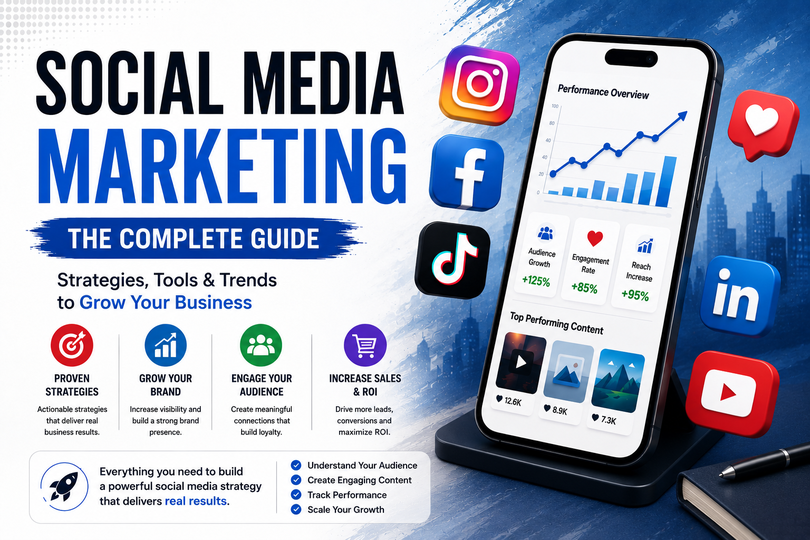
Social media is no longer just a place to share photos or catch up with friends. In 2026, it is one of the most powerful tools businesses use to find customers, build trust, and grow revenue.
If you are a business owner, marketer, or beginner trying to understand how brands grow online, this guide is for you. In this article on social media marketing, you will learn what it is, why it works, the platforms that matter most, the strategies that drive results, and the tools that make it all easier in 2026.
As a Digital Marketing Freelancer in Hyderabad, I help businesses build social strategies that actually convert, not just gain followers.
Social media marketing (often shortened to SMM) combines creativity, data, and consistency. Done right, it turns casual scrollers into loyal customers.
What Is Social Media Marketing?
Social media marketing is the use of platforms like Instagram, Facebook, LinkedIn, YouTube, and TikTok to promote a brand, connect with an audience, and drive business results such as traffic, leads, and sales.
In simple terms, SMM means showing up where your audience already spends time, and giving them a reason to notice, trust, and choose your brand.
Simple Example
When a clothing brand posts a reel showing how a jacket is made, that’s SMM in action.
When a restaurant runs a paid ad targeting people within 5 km of its location, that’s SMM too.
Both organic content and paid promotion fall under the same umbrella.
Key Takeaway: SMM is not just “posting on Instagram.” It includes strategy, content, advertising, analytics, and community management working together.
Why Social Media Marketing Matters in 2026
Social platforms have changed how people discover products, research businesses, and make buying decisions.
Social media marketing works best as part of a broader strategy — see our complete Digital Marketing for Beginners guide to understand how it fits into the bigger picture.
According to Hootsuite’s Social Media Trends report, platforms are increasingly becoming the first place users research brands before making a purchase decision.
1. People Discover Brands on Social Media First
Many shoppers now find new products through a social feed before they ever visit a search engine.
2. Trust Is Built Through Content, Not Ads Alone
Audiences trust real videos, reviews, and behind-the-scenes content more than traditional advertising.
3. Algorithms Reward Consistency
Posting regularly with relevant content increases visibility, even without a large budget.
4. Direct Communication With Customers
Comments, DMs, and community engagement let brands talk to customers in real time.
5. Affordable Compared to Traditional Advertising
Even small businesses can compete with larger brands using smart, low-budget content strategies.
Types of Social Media Marketing
To run an effective strategy, you need to understand the different types of SMM.
1. Organic Social Media Marketing
This includes regular posts, reels, stories, and community engagement without paid promotion.
Key Activities:
- Content creation
- Hashtag research
- Posting schedules
- Replying to comments and DMs
2. Paid Social Media Marketing (Social Media Advertising)
Paid promotion through platforms like Meta Ads, LinkedIn Ads, and YouTube Ads.
Example:
A Meta Ads campaign targeting people interested in fitness, shown to a specific city.
3. Influencer Marketing
Brands collaborate with influencers and creators to reach a wider, trust-based audience.
4. Social Media Content Marketing
Creating valuable content such as tutorials, infographics, and educational reels to attract and retain followers.
5. Community Management
Actively managing comments, messages, and audience interactions to build relationships and trust.
6. Social Commerce
Selling products directly through social platforms using shop features, product tags, and in-app checkout.
7. Social Media Analytics and Reporting
Tracking performance to understand what content works and refining strategy based on data.
Best Social Media Marketing Platforms in 2026
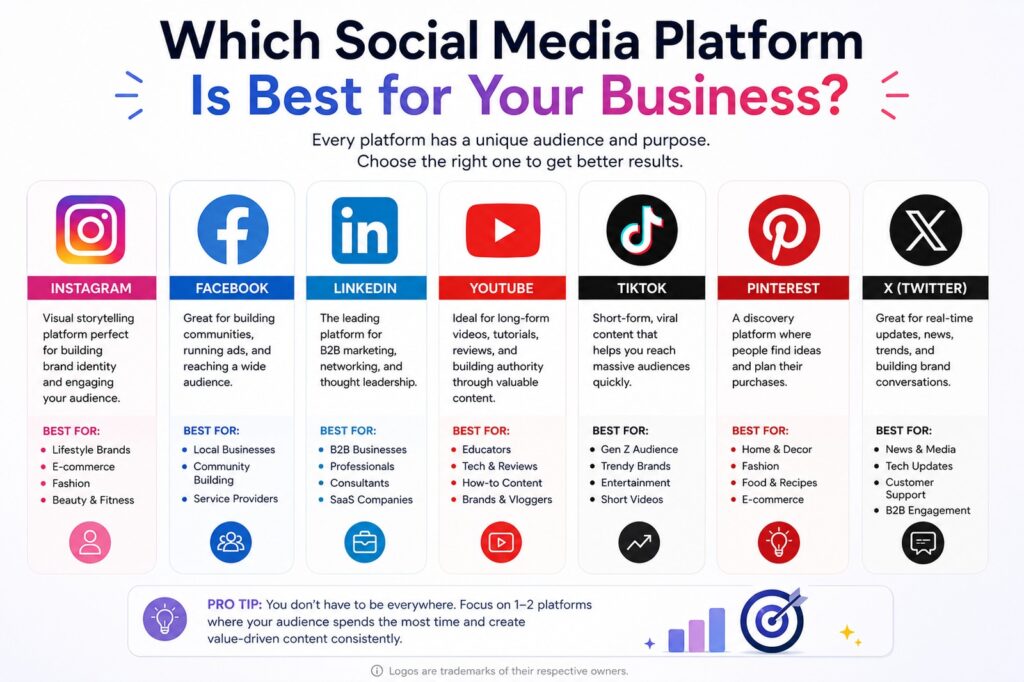
Not every platform suits every business. Choosing the right one depends on your audience and goals.
| Platform | Best For | Content Format |
|---|---|---|
| Visual brands, e-commerce, lifestyle | Reels, Stories, Posts | |
| Local businesses, community building | Posts, Groups, Ads | |
| B2B, professional services, hiring | Articles, Posts, Ads | |
| YouTube | Long-form education, tutorials | Videos, Shorts |
| TikTok | Younger audiences, viral content | Short-form video |
| Visual discovery, e-commerce | Pins, Idea Boards |
Pro Tip: Instead of trying to be active everywhere, choose 1–2 platforms where your audience already spends time, and focus your energy there before expanding.
Hashtag Strategy for Social Media Marketing
Hashtags help your content reach people beyond your existing followers by making it discoverable through search and category-based feeds. A good hashtag strategy mixes broad, popular hashtags with niche, specific ones — broad tags bring visibility, while niche tags bring a more relevant, engaged audience.
Most platforms perform best with a moderate number of well-chosen hashtags rather than a long, generic list. Treat hashtags as an ongoing experiment rather than a one-time setup, since trending tags and audience behavior shift over time.
How Social Media Marketing Works
A successful SMM process follows a clear structure.
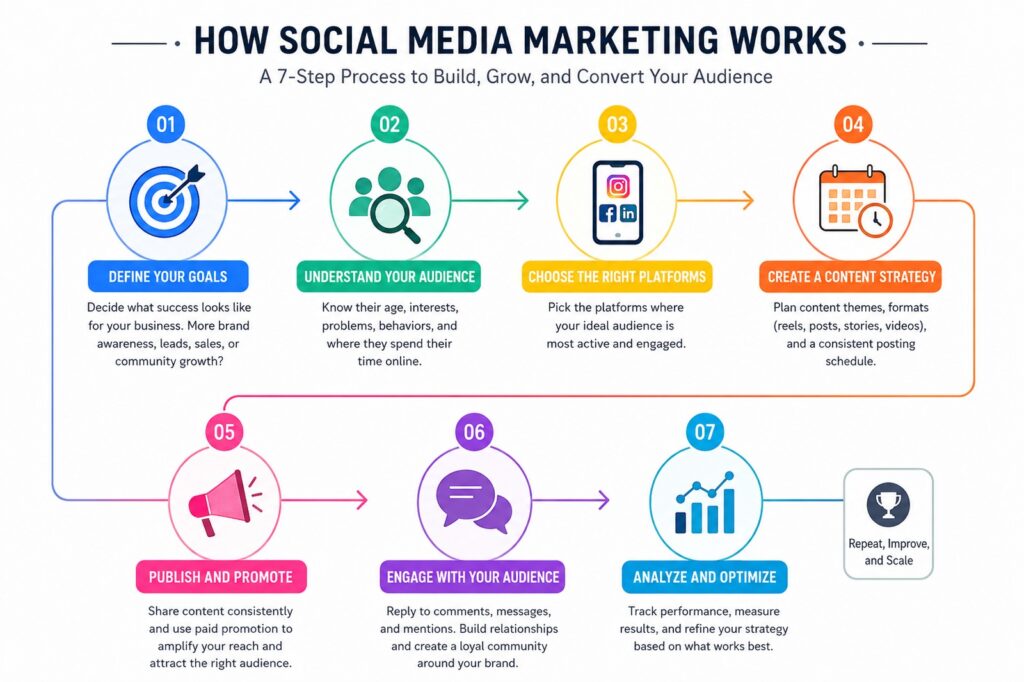
Step 1: Define Your Goals
Decide if you want brand awareness, leads, sales, or community growth.
Step 2: Understand Your Audience
Know their age, interests, problems, and preferred platforms.
Step 3: Choose the Right Platforms
Pick platforms based on where your ideal audience is most active.
Step 4: Create a Content Strategy
Plan content themes, formats, and a consistent posting schedule.
Step 5: Publish and Promote
Combine organic posting with paid promotion for faster results.
Step 6: Engage With Your Audience
Reply to comments and messages to build trust and relationships.
Step 7: Analyze and Optimize
Review performance data and adjust your strategy regularly.
Key Metrics to Track in Social Media Marketing
Knowing that you should “track performance” isn’t enough — you need to know which numbers actually matter. Reach and impressions tell you how many people saw your content, while engagement rate shows how many of those people actually interacted with it through likes, comments, or shares.
Click-through rate (CTR) measures how often people click a link in your post or bio, which matters most if your goal is website traffic or sales. Conversion rate and follower growth rate round out the picture, showing whether your content is turning attention into real business results over time.
Benefits of Social Media Marketing
1. Increased Brand Awareness
Reach thousands of potential customers without large budgets.
2. Stronger Customer Relationships
Direct interaction builds loyalty and trust over time.
3. Higher Website Traffic
Social platforms can drive consistent traffic to your website or landing pages.
4. Better Customer Insights
Comments, shares, and engagement reveal what your audience actually wants.
5. Improved Sales and Conversions
Social proof and targeted ads often lead to direct purchases.
Social Media Marketing Strategy: Step-by-Step Guide
If you are starting from zero, follow this practical roadmap.
If building this out yourself feels like too much, explore my Digital Marketing Services in Hyderabad for hands-on support.
Step 1: Set Clear Objectives
Be specific. Example: “Generate 50 leads per month through Instagram.”
Step 2: Research Your Competitors
Study what similar businesses are posting and what performs well for them.
Step 3: Build a Content Calendar
Plan posts in advance instead of posting randomly.
Step 4: Create a Content Mix
Use a balance of educational, entertaining, and promotional content.
Step 5: Use Paid Ads Strategically
Boost your best-performing organic content instead of guessing with new ads.
Step 6: Track Key Metrics
Monitor reach, engagement, click-through rate, and conversions.
Common Mistake: Posting only promotional content. Audiences disengage quickly from accounts that only try to sell, without offering value first.
Social Media Marketing Tools to Know in 2026
The right tools can save hours of manual work each week.
Platforms like Meta Business Suite and Canva are widely used by marketers managing multiple social accounts.
| Tool | Best Used For |
|---|---|
| Canva | Designing posts and graphics |
| Meta Business Suite | Scheduling and managing Facebook/Instagram |
| Buffer | Multi-platform scheduling |
| Hootsuite | Scheduling and analytics |
| CapCut | Short-form video editing |
| Google Analytics | Tracking traffic from social channels |
These tools make SMM easier to manage, even for small teams or solo marketers.
The Role of AI in Social Media Marketing
Artificial intelligence is changing how brands plan, create, and manage social content in 2026.
AI is now used for:
- Generating caption and content ideas
- Suggesting optimal posting times
- Analyzing audience sentiment
- Automating responses to common questions
- Predicting which content formats will perform best
Key Takeaway: AI supports SMM by saving time and improving decisions, but human creativity and authentic voice are still what build real audience trust.
AI is reshaping more than just social platforms — see how it’s also transforming AI SEO and search visibility.
Common Mistakes to Avoid in Social Media Marketing
1. Inconsistent Posting
Random, infrequent posting makes it hard to build momentum.
2. Ignoring Analytics
Posting without reviewing performance means repeating the same mistakes.
3. Trying to Be Everywhere
Spreading effort across too many platforms often leads to weak results on all of them.
4. Buying Followers
Fake followers do not engage, buy, or build real trust for your brand.
5. No Clear Brand Voice
Inconsistent tone and messaging confuses your audience over time.
Real-Life Examples of Social Media Marketing
Local Business
A neighborhood bakery uses Instagram Reels showing daily baking process to build local trust and walk-in traffic.
E-commerce Brand
An online store uses Meta Ads with product catalogs to retarget website visitors who didn’t complete a purchase.
Service-Based Business
A consultant uses LinkedIn posts sharing client results to attract new leads through credibility-driven content.
If you’re looking to get this kind of expert help, here’s how to hire a digital marketing freelancer in Hyderabad who can run these strategies for your business.
User-Generated Content (UGC)
User-generated content refers to posts, reviews, photos, or videos created by your customers rather than your brand itself. It has become one of the most trusted forms of social proof in 2026 — when a brand reposts a genuine customer review or video, it carries more credibility than the same message coming directly from the business.
This same trust-building effect feeds directly into local SEO for Hyderabad businesses, where genuine reviews and social proof influence how high you rank on Google Maps.
Encouraging UGC can be as simple as asking customers to tag your brand or share their experience using a specific hashtag, then featuring the best examples on your own page. This also reduces the pressure to constantly produce original content, since some of your best-performing posts can come directly from your own customers.
Future of Social Media Marketing
1. Short-Form Video Continues to Dominate
Reels, Shorts, and TikTok-style content remain the most consumed format.
2. AI-Personalized Content
Platforms will increasingly tailor content recommendations to individual user behavior.
3. Social Commerce Growth
More purchases will happen directly within social apps, without leaving the platform.
4. Authenticity Over Polish
Raw, real, and relatable content continues to outperform overly produced ads.
5. Community-Led Growth
Brands that build genuine communities will outperform those focused only on follower count.
Conclusion
Social media marketing in 2026 is no longer optional for businesses that want to grow. It combines strategy, content, advertising, and genuine audience connection to build long-term brand value.
The businesses that succeed are not always the ones with the biggest budgets. They are the ones that stay consistent, understand their audience, and adapt based on real data.
Next steps: Pick one platform where your audience is most active, set one clear goal, and commit to consistent posting for the next 30 days. Track your results, learn what works, and build from there.
Want to know more about my approach to marketing? Read more about me here.
FAQs
SMM is the use of platforms like Instagram, Facebook, LinkedIn, and TikTok to promote a brand, build an audience, and generate business results such as traffic, leads, and sales.
What does SMM mean in marketing?
SMM stands for Social Media Marketing. It refers to the overall practice of marketing a business using social media platforms.
It depends on your audience. Instagram works well for visual brands, LinkedIn for B2B, and TikTok for younger audiences.
No. Social media marketing is the practice itself, while an SMMA is a business that offers this as a paid service to clients. If you’re deciding between hiring one or working with an independent freelancer, see our full comparison: Social Media Marketing Agency vs Freelancer in Hyderabad.
Costs vary widely. Organic SMM can be low-cost, while paid advertising budgets can range from a few hundred to several thousand rupees or dollars per month, depending on goals.
Yes. With consistent content and a clear understanding of their audience, small businesses can compete effectively, even with limited budgets.
Most businesses start seeing measurable engagement within 4–8 weeks of consistent effort, though significant growth often takes 3–6 months.

Tarunkumar Adapa is a Digital Marketing Freelancer in Hyderabad, certified by Digital Scholar, with 1.5+ years of hands-on experience in AI-powered SEO, social media marketing, content marketing, and performance marketing. He helps startups and local businesses across Hyderabad build measurable, results-focused growth strategies.